.png&w=1920&q=75)
.png&w=1920&q=75)


Indira Gandhi National Open University Fees, Admission 2026, Courses, Cutoff, Ranking, Placement


IGNOU Cost 2026: Fees, Courses, Admission & Grade Card Guide
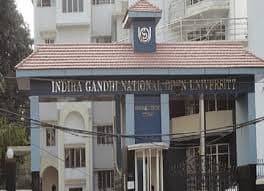
Indira Gandhi National Open University (IGNOU) is the world's largest open university accredited with A++ grade by NAAC. The University offers over 400 programmes through Open Distance Learning (ODL) and online modes. Its affordability is a major draw. The IGNOU fees for BA 1st year costs around ₹4,800. A complete three-year BA degree costs approximately ₹14,400. Specialized master's programmes like MBA cost up to ₹66,000. For working professionals, rural learners, and career-changers, IGNOU admission costs represent accessible transformation without crushing debt. Beyond the annual programme fee, you will encounter registration charges, examination costs, and re-registration requirements.
IGNOU organizes its academic programmes through 21 Schools of Studies. It has a nationwide network of 67 Regional Centres (including regular RCs and Recognized Regional Centres like those for Army, Navy, Assam Rifles, and North-East special ones). Alongside this, IGNOU operates through 25 Overseas Study Centres (OSCs) in 15 foreign countries for international students (e.g., in UAE, Kuwait, Oman, Bahrain, etc.). This includes activated centres for fresh admissions and existing students.
IGNOU Grade card calculations can also be tricky. Whether you're budgeting for a ₹600 convocation fee or understanding your academic record, the details matter. This guide breaks down every rupee you'll spend and every step you'll take, from Samarth portal admission to final grade card verification. If you're weighing distance education against traditional classroom costs, understanding these numbers is essential for a sound financial and academic decision.
Table of Contents
IGNOU Fees Structure 2026
Indira Gandhi National Open University (IGNOU) is India's premier distance learning institution, serving over 7 million students nationwide. Its education model prioritizes affordability and accessibility. Unlike conventional universities where annual fees can range from ₹50,000 to ₹5 lakh, IGNOU's fee structure aims to democratize higher education for students from diverse economic backgrounds. The university's cost framework includes registration fees, programme fees, examination charges, and administrative costs. These costs vary based on the academic level and course. Understanding these cost components is essential for prospective students to plan their finances. IGNOU operates on a pay-as-you-progress model, rather than requiring large upfront payments. The fee structure also reflects the program delivery mode. Online and distance learning options typically cost less than programs requiring physical laboratory sessions or practical training. The IGNOU BA fees per semester is not known. However, the per year cost has been revealed officially. The following table presents a detailed breakdown of IGNOU admission fee structure for 2026, covering all major cost components that students encounter during their academic journey:
|
Fee Component |
Amount |
|
Registration Fee (One-time) |
₹300 /₹500 (FLIP)* |
|
UG (BA/B.Com/B.Sc) (Per Year) |
₹4,800 - ₹16,500 |
|
PG (MA/M.Com) (Per Year) |
₹7,300 - ₹31,000 |
|
PG (MCA/ M.Sc) (Per Semester) |
₹13,00 - ₹30,000 |
|
MBA Programme Fee (Per Semester) |
₹16,000 - ₹18,000 |
|
PG Diploma/ Diploma/ Certificate (Total) |
₹3,200 - ₹13,500 |
|
Examination Fee (Per Course) |
₹200 |
|
Late Examination Fee |
₹500 |
|
Re-registration Fee (Annual) |
₹300 |
|
Project/Practical Fee (Where Applicable) |
₹300 (upto 4 credits) |
|
Convocation Fee |
₹600 |
|
Migration Certificate Fee |
₹2,000 |
|
Duplicate Identity Card Fee |
₹500 |
|
Programme Change Fee |
₹500 - ₹1,000 |
|
Examination Centre Change Fee |
₹500 - ₹1,000 |
* FLIP stands for Fixed Learner Intake Programmes with limited seats.
IGNOU's fee structure is highly competitive compared to other open universities in India. The University of Mumbai's Institute of Distance and Open Learning charges approximately ₹8,500-₹15,000 annually for comparable UG programs. Delhi University's School of Open Learning fees range from ₹6,000-₹12,000 per year. Regular universities like Delhi University, JNU, or state universities typically charge ₹20,000-₹1,50,000 annually for similar programs. This makes IGNOU nearly 60-80% more affordable. You can pay fees online through credit/debit cards, net banking, UPI, and demand drafts. There are strict deadlines aligned to admission cycles in January and July. Note that all fees are non-refundable after the cancellation deadline. Timely payment ensures uninterrupted access to study materials and examination eligibility.
IGNOU Admission Process 2026
The IGNOU admissions are conducted twice a year. Once in January and the other in July. The January admission session for ODL programmes is ongoing. The last date to apply is 15 Feb 2026. The mode of application is online. The University does not accept offline forms. Students can apply on the dedicated official website mentioned below:
- ODL: https://ignouadmission.samarth.edu.in/
- FLIP programmes: https://ignouflip.samarth.edu.in/
- Online Programmes: https://ignouiop.samarth.edu.in/
The step-by-step application process is explained below:
Step 1: For New Registration create username & password (via OTP on email/ mobile).
Step 2: Fill form with correct details.
Step 3: Upload photo (<100 KB), signature (<100 KB), marksheets (<200 KB), category certificate (if applicable).
Step 4: Pay fee online (Credit/Debit Card, Net Banking, UPI).
Step 5: Submit & download the form for future references.
Step 6: Download and print the payment confirmation bearing your unique Enrollment Number (starting with 2026 for current admissions).
Step 7: Check your admission confirmation within 15 days through the "Know Your Status" link using your application number.
Step 8: Access your digital ID card from the portal after verification. You can collect physical copies from your Regional Centre.
Step 9: Download e-content immediately or collect printed blocks from your study centre within 4-6 weeks of admission confirmation.
Step 10: Pay annual continuation fees of ₹300 plus program fees before the deadline to maintain active enrollment for subsequent years.
IGNOU Admission Modes & Courses Offered 2026
There are three IGNOU admission modes namely, ODL (Open Distance Learning), FLIP (Fixed Learner Intake Programmes) and Online Programmes (IOP).
|
Aspect |
ODL (Open Distance Learning) Programmes |
FLIP (Fixed Learner Intake Programmes) |
Online Programmes (IOP) |
|
Admission Type |
Direct admission (for eligible candidates; first-come, first-served where applicable) |
Merit-based / Fixed seats (limited intake; merit list prepared, shortlisting required) |
Direct admission (similar to ODL but fully online delivery) |
|
Registration Fee |
₹ 300 (non-refundable) |
₹ 500 (non-refundable) |
₹ 300 (non-refundable) |
|
Mode of Delivery |
Primarily printed study material (digital option with 15% fee discount); face-to-face counselling possible at study centres; pen-and-paper Term-End Exams (TEE) |
Similar to ODL (printed/digital material, counselling); but limited due to practical/resource constraints (e.g., health/education programmes) |
Fully digital (LMS access, online resources only); technology-based support; online/proctored exams possible |
|
Number of Programmes |
Over 300 |
Limited (6–10 active programmes per cycle) |
Around 40–50 |
|
Key Examples |
- UG: BAM (BA Multidisciplinary), BCOM, BCA_NEW, BBA, BSCG |
- PGDMCH (PG Diploma in Maternal & Child Health) |
- BCA_NEWOL / BCAOL (Bachelor of Computer Applications) |
|
Typical Eligibility |
Varies by programme (10+2 for UG, graduation for PG/ Diploma) |
Often professional/qualification-specific (e.g., medical/nursing background for health programmes) |
Same as equivalent ODL programme (but fully online-friendly) |
|
Suitability |
Best for learners preferring printed material, regional study centre support, or less internet dependency |
Ideal for specialized professional fields with limited seats (e.g., healthcare, special education) |
Best for tech-savvy learners comfortable with fully online learning, LMS, and digital exams |
|
Current Status (Jan 2026 Cycle) |
Last Date to submit application: 15 Feb 26 |
Last Date to submit application: 15 Feb 26 |
Last Date to submit application: 15 Feb 26 |
IGNOU UG Courses: Eligibility & Fees
Most UG programmes follow the NEP-aligned FYUP (Four-Year Undergraduate Programme) structure. The general eligibility for most IGNOU UG courses is 10+2 or equivalent from a recognized board (no upper age limit). Students have to pay ₹300 (non-refundable) registration fee and University Development fee of ₹400 (one-time at the time of admission). SC/ST fee exemptions/ support is available for selected programmes (income criteria apply). The IGNOU B.Ed admission are entrance-based. Check the eligibility and fees for popular UG courses offered at IGNOU:
|
Programme Name |
Code |
Duration (Min-Max) |
Eligibility |
Annual Fee (₹) |
|
Bachelor of Arts (Multidisciplinary/General) |
BAM / BAG |
3–6 years (FYUP: 3/4–6/8) |
10+2 or equivalent |
4,800 |
|
Bachelor of Arts (Honours) Economics |
BAECH |
3/4–6/8 years |
10+2 or equivalent |
5,300 |
|
Bachelor of Arts (Honours) English |
BAEGH |
3/4–6/8 years |
10+2 or equivalent |
5,300 |
|
Bachelor of Arts (Honours) Hindi |
BAHDH |
3/4–6/8 years |
10+2 or equivalent |
5,300 |
|
Bachelor of Arts (Honours) History |
BAHIH |
3/4–6/8 years |
10+2 or equivalent |
5,300 |
|
Bachelor of Arts (Honours) Political Science |
BAPSH |
3/4–6/8 years |
10+2 or equivalent |
5,300 |
|
Bachelor of Arts (Honours) Public Administration |
BAPAH |
3/4–6/8 years |
10+2 or equivalent |
5,300 |
|
Bachelor of Arts (Honours) Sociology |
BASOH |
3/4–6/8 years |
10+2 or equivalent |
5,300 |
|
Bachelor of Arts (Psychology) |
BAPC / variants |
3–6 years |
10+2 or equivalent |
5,800 + practical fee (~600/yr) |
|
Bachelor of Commerce |
BCOMF |
3/4–6/8 years |
10+2 or equivalent |
4,800 |
|
Bachelor of Computer Applications |
BCA_NEW |
3–6 years |
10+2 or equivalent (Maths preferred in some cases) |
~13,000–14,000 |
|
Bachelor of Business Administration |
BBA |
3–6 years |
10+2 or equivalent |
~10,000–12,000 |
|
Bachelor of Science (General) |
BSCG / BSCM |
3–6 years |
10+2 with Science or equivalent |
6,300 |
|
Bachelor of Science (Honours) Anthropology |
BSCANH |
3/4–6/8 years |
10+2 or equivalent |
6,300 |
|
Bachelor of Science (Mathematics) |
BSCFMT |
3/4–6/8 years |
10+2 with Mathematics |
6,000 |
|
Bachelor of Social Work |
BSW / BFSW |
3/4–6/8 years |
10+2 or equivalent |
6,500 |
|
Bachelor of Tourism and Travel Management |
BFTTM |
3/4–6/8 years |
10+2 or equivalent |
5,000–5,300 |
|
Bachelor of Library and Information Science |
BLIS |
1–2 years |
Graduation (for some) or 10+2 + work exp. in some cases |
~8,000–10,000 (full) |
|
Bachelor of Arts (Vocational Studies) - Various (e.g., Tourism, MSME) |
BAVTM / BAMSME etc. |
3/4–6/8 years |
10+2 or equivalent |
5,300–5,400 |
IGNOU PG Courses: Eligibility & Fees
Most PG programmes follow a minimum 2-year duration (maximum up to 5 years under flexible rules), with annual or semester-wise fee payment. Bachelor's degree or equivalent from a recognized university (no upper age limit; specific requirements noted where applicable) is required to IGNOU PG admission 2026. Registration ₹300 (non-refundable) and University Development Fee ₹400 (one-time) are also to be paid. Refer to the table below to know the eligibility and fees of popular PG courses:
|
Programme Name |
Code |
Duration (Min-Max) |
Eligibility |
Annual Fee (₹) |
|
Master of Arts (English) |
MEG / MAEG |
2–5 years |
Bachelor's degree in any discipline |
7,500–8,000 |
|
Master of Arts (Hindi) |
MHD |
2–5 years |
Bachelor's degree in any discipline |
7,500 |
|
Master of Arts (History) |
MAHI |
2–5 years |
Bachelor's degree in any discipline |
7,500 |
|
Master of Arts (Political Science) |
MPS |
2–5 years |
Bachelor's degree in any discipline |
7,500–8,000 |
|
Master of Arts (Public Administration) |
MPA |
2–5 years |
Bachelor's degree in any discipline |
7,500 |
|
Master of Arts (Economics) |
MEC / MAEC |
2–5 years |
Bachelor's degree or higher from recognized univ. |
9,000–9,500 |
|
Master of Arts (Sociology) |
MSO / MASO |
2–5 years |
Bachelor's degree in any discipline |
7,300–8,000 |
|
Master of Arts (Psychology) |
MAPC |
2–5 years |
Bachelor's degree (Psychology preferred) |
9,600–9,800 |
|
Master of Arts (Education) |
MAEDU |
2–5 years |
Bachelor's degree (with/without B.Ed) |
10,000 |
|
Master of Arts (Distance Education) |
MADE |
2–5 years |
Bachelor's degree in any discipline |
6,500 |
|
Master of Arts (Rural Development) |
MARD |
2–5 years |
Bachelor's degree in any discipline |
6,900 |
|
Master of Commerce |
MCOM |
2–5 years |
Bachelor's degree (Commerce preferred) |
8,100–9,500 |
|
Master of Computer Applications |
MCA_NEW |
2–5 years |
Bachelor's degree + Maths at 10+2/grad level |
25,000– 26,000 |
|
Master of Business Administration |
MBA |
2–5 years |
Bachelor's degree (50% marks; entrance may apply) |
32,000–36,000 |
|
Master of Social Work |
MSW |
2–5 years |
Bachelor's degree in any discipline |
18,000–19,200 |
|
Master of Library & Information Science |
MLIS |
1–3 years |
Bachelor's degree (BLIS preferred) |
11,300–12,000 (total) |
IGNOU Grade Card and Result System 2026
IGNOU primarily uses a letter-grade system with 5-point scale (Grade Points 5 to 1) for assigning final grades per course on the Grade Card. The grades are based on the aggregate percentage (weighted: typically 30% assignments + 70% Term-End Exam, or as per programme rules). Passing requires a minimum of 40% aggregate (and separately in theory/assignments/practicals where applicable), with E indicating failure. The table below indicates the standard IGNOU Grade Card:
|
Grade |
Marks Range (Percentage) |
Performance |
|
A |
80% and above |
Excellent / Outstanding |
|
B |
60% to 79.9% |
Very Good |
|
C |
50% to 59.9% |
Good |
|
D |
40% to 49.9% |
Satisfactory / Pass |
|
E |
Below 40% |
Unsatisfactory / Fail |
To access your grade card online, visit the IGNOU official website and navigate to the Student Support section. Enter your nine-digit enrollment number and select your program code to view consolidated marks. For re-evaluation, submit Form No. 1 with a fee of ₹750 per course within 30 days of result declaration. If you score a D grade or below, you can opt for improvement examinations by paying the standard examination fee of ₹200 per course. The better of the two scores will be retained. The system ensures fairness through double evaluation of answer scripts and provision for photocopy access before re-evaluation requests.
Tips to Reduce Your IGNOU Cost 2026
Pursuing higher education through Indira Gandhi National Open University (IGNOU) is already one of the most affordable options in India. Annual programme fees range from ₹3,600 to ₹21,600, depending on your chosen course. However, for students from economically weaker sections, working professionals managing tight budgets, or those supporting families, every rupee saved matters. The university provides avenues to reduce educational expenses beyond the base fees. These include government-funded scholarships, institutional fee waivers, and digital resource alternatives. Digital resources eliminate printing and textbook costs. Strategically navigating these opportunities can reduce your total expenditure by 30-50% over the duration of your programme. Smart financial planning combined with disciplined academic management ensures you complete your degree without unnecessary financial strain or debt accumulation. Here are strategies to minimize your IGNOU expenses in 2026:
- Apply for IGNOU-Specific Scholarships: The university offers fee waivers for SC/ST students, persons with disabilities, and economically backward classes covering up to 100% of programme fees. Submit applications through your regional centre before the academic session begins.
- Utilize E-Gyankosh Digital Library: Access all study materials, previous question papers, and reference books free through IGNOU's digital repository instead of purchasing printed blocks or external textbooks.
- Opt for E-Study Material: Select the digital study material option during admission to save ₹500-800 annually on physical book dispatch charges. This is especially beneficial for students in remote locations.
- Submit Examination Forms Before Deadlines: IGNOU charges ₹100 as a late fee for exam form submissions after the due date. Set calendar reminders 15 days before deadlines to avoid this penalty.
- Clear Courses in First Attempt: Re-appearing for failed papers costs ₹200 per course in examination fees plus additional study time. Dedicate consistent weekly hours to assignments and term-end preparation.
- Access Free SWAYAM and NPTEL Courses: Supplement your IGNOU curriculum with free MOOCs that provide additional certification without extra cost. This is particularly useful for technical and management programmes.
- Form Peer Study Groups: Connect with classmates through WhatsApp or Telegram groups to share printed notes, divide reference book purchases, and pool resources for project work.
- Claim Central Sector Scholarship Schemes: Apply for Post-Matric Scholarships for OBC/SC/ST students through the National Scholarship Portal (scholarships.gov.in). These can cover full tuition and maintenance allowances.
- Attend Free Counseling Sessions: Participate in teleconferencing sessions and interactive radio counselling instead of paying for private tutoring. Schedule details are published on the IGNOU website monthly.
- Complete Programmes Within Stipulated Duration: Extending your programme beyond the maximum duration requires re-registration fees of ₹300 per year. Create a realistic study timetable balancing work and academics.
- Download Official IGNOU Mobile App: Access audio-visual materials, e-books, and assignment submission guidelines free through the official app. This reduces dependency on paid coaching materials.
- Apply for State Government Education Assistance: Many state governments provide financial aid to distance education students. Check your state's social welfare department portal.
Implementing these cost-reduction strategies requires proactive planning and consistent follow-through. This is especially true for scholarship applications, which have fixed annual windows. Start by assessing your eligibility for fee waivers immediately after admission confirmation. Then, build a study schedule that prioritizes first-attempt exam clearance. The combination of institutional support, digital resources, and disciplined time management can bring your total IGNOU education cost below ₹5,000 annually for most undergraduate programmes. This makes quality higher education genuinely accessible regardless of financial background.
Frequently Asked Questions
Q1. What is the total cost for IGNOU BA first year in 2026?
You will pay ₹4,800 as IGNOU fees for BA 1st year in 2026. Apart from this, the Registration Fee & Development Fee as applicable have to be paid.
Q2. How much does IGNOU MA English cost in 2026?
You will pay ₹8,000 per year for MA English (MEG) at IGNOU in 2026. Alongside, the Registration Fee & Development Fee as applicable have to be paid.
Q3. What are the hidden fees in IGNOU admission 2026?
You should budget for a ₹500 late examination fee, a ₹600 convocation fee, and a ₹500 migration certificate fee beyond your main programme cost. Re-registration costs ₹300 each year. Changing your examination centre costs ₹500 to 1,000 and duplicate ID cards cost ₹500.
Q5. How can I reduce my IGNOU cost in 2026?
You can choose e-study materials to save printing costs and complete assignments on time to avoid ₹100 late fees. You should use IGNOU's free digital library and online resources instead of buying books. Preparing well for exams prevents you from paying ₹200 per course again for re-attempts.